What to do when a broker changes appointment times
A practical risk review for checking how revised pickup or delivery times affect hours, detention, layover, reloads, and written terms, written for carriers that need cleaner broker checks and billing records before committing a truck.
Written and reviewed by LaneMath Editorial Team, with carrier workflow review from Dale Morrow where practical dispatch, paperwork, or lane-planning context is involved. Updated 2026-06-29. LaneMath pages use public references, example-only math, and conservative editorial review.
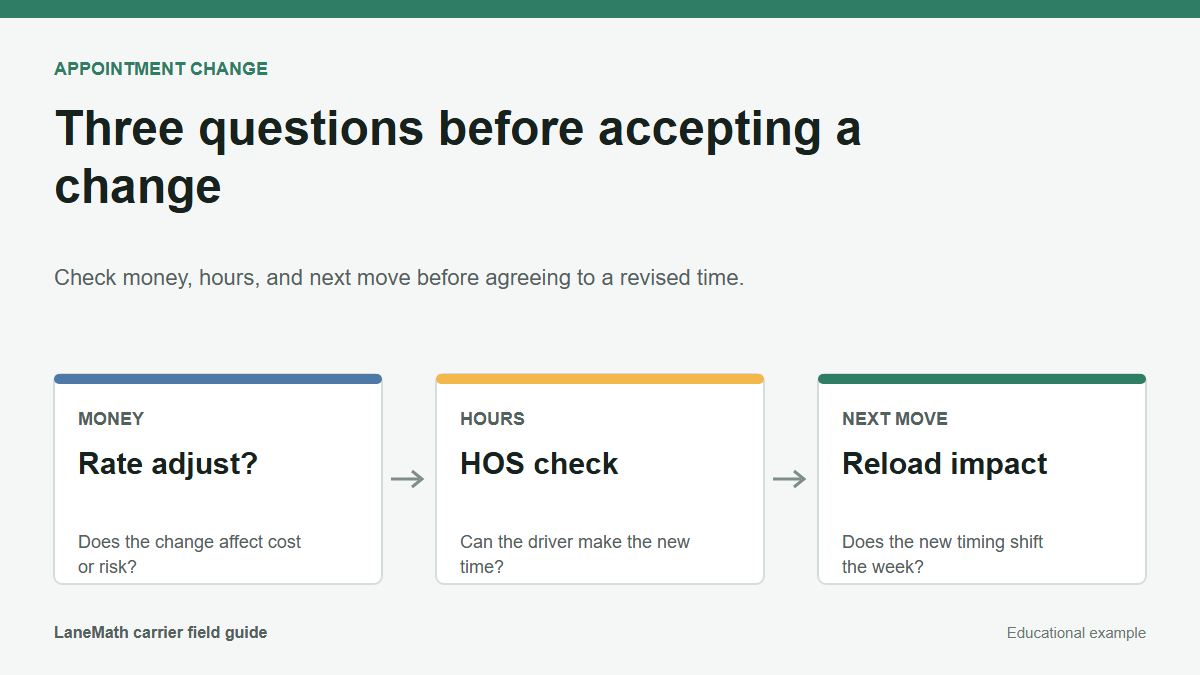
Appointment change review table
An appointment change should be evaluated for its impact on money, hours, and the truck's next move before being accepted.
| Signal | Why it matters | Next check |
|---|---|---|
| Pickup is pushed later | A delayed pickup can make the original delivery appointment impossible. | Check whether the new pickup allows on-time delivery within available hours. |
| Delivery time moves to the next day | The truck may need overnight parking, creating a layover situation. | Ask whether layover applies and request a revised confirmation. |
| Change was made by the shipper directly | Broker and driver may have different information about which time controls. | Contact the broker immediately to confirm which appointment is now written. |
| Rate was already agreed before the change | A later appointment may have changed the economics of the load. | Ask whether the rate adjusts to reflect the new timeline before accepting. |
Key takeaways
- Ask whether the new appointment changes the rate or accessorial exposure.
- Check if the truck loses a reload, parking plan, or delivery window.
- Request a revised confirmation when the change materially affects the load.
Working frame for what to do when a broker changes appointment times
A practical risk review for checking how revised pickup or delivery times affect hours, detention, layover, reloads, and written terms, written for carriers that need cleaner broker checks and billing records before committing a truck. The first operating question is whether the subject changes money, time, equipment fit, payment exposure, or the truck's position after delivery. Keep those effects separate so one attractive number does not hide an unresolved condition.
Checks before the truck is committed
Ask whether the new appointment changes the rate or accessorial exposure. Check if the truck loses a reload, parking plan, or delivery window. Request a revised confirmation when the change materially affects the load. Write down any term that still depends on a broker reply before dispatch. Confirm the exact commodity, weight, equipment, appointments, facility rules, and approval path that apply to this load rather than relying on a familiar lane or broker relationship.
Operating note
An appointment change is a negotiating moment, not just a scheduling update. When a broker calls to move a pickup or delivery, the carrier should ask two things before agreeing: does the change affect rate or timing exposure, and is the revised appointment confirmed in writing. A small time shift on paper can mean a full layover, a lost reload, or a detention clock that now starts differently. Moving the appointment without a written revision gives the broker a new commitment while the carrier holds only a phone conversation.
A time change can change the load
A revised appointment is not just a calendar update. It can affect hours of service, parking, detention, layover, receiver access, and whether the truck can keep a reload. Ask whether the change alters the rate, accessorial exposure, or delivery plan before treating it as routine.
What else moves when the appointment moves?
Ask for the new time, reason, facility confirmation, and whether pickup, delivery, detention, layover, parking, or the next load is affected. Check the driver's available hours before agreeing. A one-hour calendar change can become an overnight operating change when the facility has a narrow check-in window.
Updating the driver but not the agreement
Dispatch may text the new time and treat the issue as closed. If the change causes a lost reload, extra day, or different detention exposure, the rate and accessorial terms may also need review. Verbal acceptance without a revised record leaves billing with the original schedule.
Keep both appointment versions
Save the original confirmation, change request, facility or broker confirmation, revised appointment, driver acknowledgment, and any rate or accessorial revision. Note the time the carrier learned of the change. That sequence matters when the change later becomes part of a delay or service dispute.
Example scenario
A 9 a.m. delivery moves to 4 p.m. The truck can still arrive, but the new time eliminates a confirmed afternoon reload. The carrier documents the lost schedule, asks about layover exposure, and obtains the revised appointment in writing before agreeing. The numbers and circumstances are educational examples; replace them with the actual route, written terms, costs, and operating limits for the load being considered.
What to check before booking
- Ask whether the new appointment changes the rate or accessorial exposure.
- Check if the truck loses a reload, parking plan, or delivery window.
- Request a revised confirmation when the change materially affects the load.
- Write down any term that still depends on a broker reply before dispatch.
Common questions
What is the first thing a carrier should ask when a broker calls to change an appointment?
Ask whether the change affects the rate, accessorial exposure, or delivery window — and then ask for a revised confirmation if it does. A changed appointment that creates new detention risk, an extended layover, or a missed reload should be reflected in writing before the truck adjusts its plan.
Is a verbal appointment change from a broker binding?
A verbal change is a conversation, not a document. If the original confirmation has a specific appointment and the broker changes it by phone without a written update, both sides may have different records of what time controlled. A short message confirming the revised time and requesting a revised confirmation creates a cleaner record.
Should a carrier ask for extra pay when a broker pushes the pickup or delivery time significantly?
It is reasonable to ask when the change creates a meaningful cost — a layover that was not planned, a pickup delay that prevents a same-day reload, or an appointment shift that requires the truck to sit overnight in an expensive area. Frame the request around the specific operational impact rather than a general rate dispute. The broker may have budget to address a documented delay even when the original rate was settled.
What if the broker changes the appointment but the shipper has different information?
A mismatch between broker-provided appointment information and what the shipper shows on arrival is a specific problem worth resolving with the broker immediately. The driver should not adjust the plan based on shipper information that contradicts the written confirmation without first contacting the broker. Documenting the mismatch — who said what, at what time — protects the carrier if there is a later billing or delay dispute.
References and methodology
- Broker negotiation editorial methodology - LaneMath Editorial Desk. Used here for: Broker call preparation, rate discussion, appointment changes, written confirmations, and walk-away decision examples.Used for practical negotiation education. It does not provide legal advice, pricing promises, or broker recommendations. Last checked 2026-06-29.
- Accessorial documentation editorial methodology - LaneMath Editorial Desk. Used here for: Detention, lumper, layover, TONU, revised confirmation, and post-delivery document workflow examples.Used for documentation workflows and example scenarios, not for legal claims about collectability. Last checked 2026-06-29.