Load board terms explained
A load-selection guide to common terms carriers see when searching posted truckload freight, built around what to ask, what to verify, and what to write down before the truck moves.
Written and reviewed by LaneMath Editorial Team, with carrier workflow review from Dale Morrow where practical dispatch, paperwork, or lane-planning context is involved. Updated 2026-06-29. LaneMath pages use public references, example-only math, and conservative editorial review.
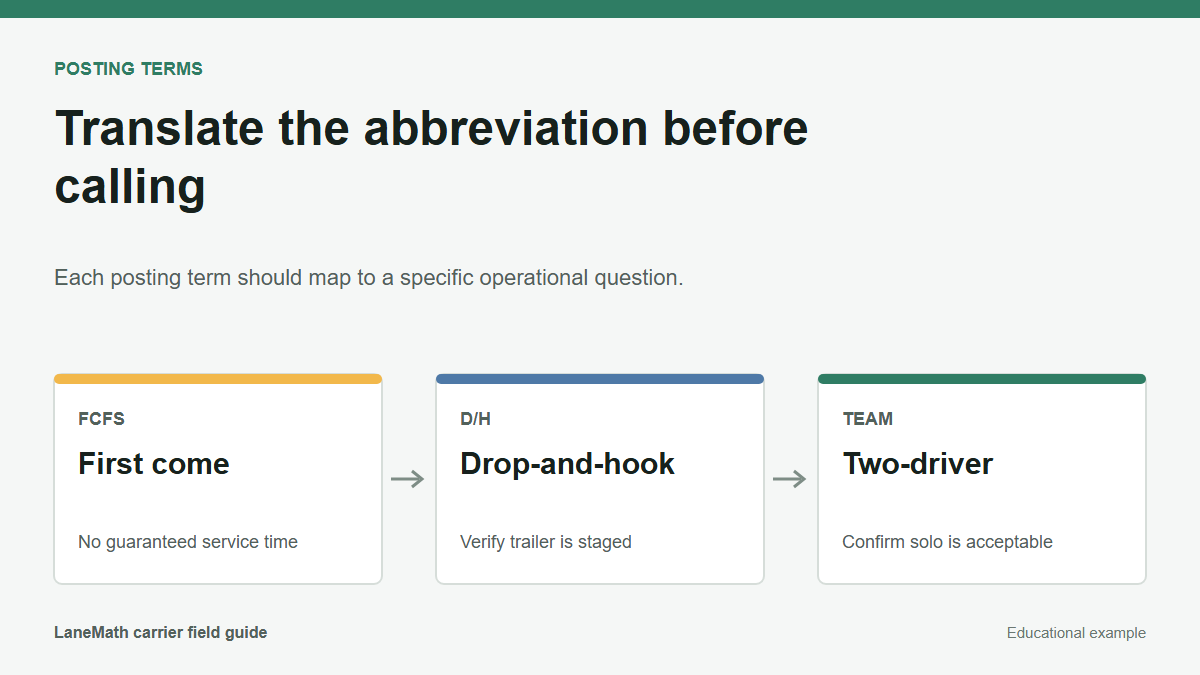
Posting term verification table
Each abbreviation on a posting should be translated into an operational question before the call is made.
| Signal | Why it matters | Next check |
|---|---|---|
| FCFS is listed | First-come, first-served does not guarantee dock access on arrival. | Ask whether there is a last-check-in cutoff and typical dwell. |
| Drop-and-hook is shown | The trailer may not be preloaded, accessible, or in usable condition. | Confirm the trailer is staged and meets equipment requirements. |
| Team is noted | The rate and service expectation may reflect two-driver capability. | Confirm whether a solo carrier is acceptable at the offered rate. |
| Tarp required appears | Tarping adds labor and time not reflected in loaded miles. | Confirm tarp type, pay, and whether the driver must supply the tarp. |
Key takeaways
- Clarify abbreviations before booking.
- Match equipment requirements to your truck and insurance.
- Do not assume included charges unless the confirmation says so.
Working frame for load board terms explained
A load-selection guide to common terms carriers see when searching posted truckload freight, built around what to ask, what to verify, and what to write down before the truck moves. The first operating question is whether the subject changes money, time, equipment fit, payment exposure, or the truck's position after delivery. Keep those effects separate so one attractive number does not hide an unresolved condition.
Checks before the truck is committed
Clarify abbreviations before booking. Match equipment requirements to your truck and insurance. Do not assume included charges unless the confirmation says so. Write down any term that still depends on a broker reply before dispatch. Confirm the exact commodity, weight, equipment, appointments, facility rules, and approval path that apply to this load rather than relying on a familiar lane or broker relationship.
Operating note
Load board terms should be translated into operational questions. Words like drop, live, FCFS, team, tarp, hazmat, partial, and all-in can each change the truck plan. A carrier should ask what the term means on this specific shipment because brokers and shippers may use shorthand differently. The safest habit is to turn each abbreviation into a confirmation line that can be checked against the rate confirmation.
What does the shorthand mean on this load?
Terms such as FCFS, drop, partial, team, all-in, and driver assist are not detailed instructions. Ask how the broker is using the term and what the shipper or receiver expects. If an abbreviation affects equipment, labor, timing, or payment, it belongs in the written confirmation.
Familiar abbreviations can create false confidence
A dispatcher may recognize the label and skip the follow-up. FCFS can still have a last check-in time; drop freight may require a trailer pool; a partial can occupy more deck space than its weight suggests. The shorthand narrows the question but rarely answers it.
Translate shorthand into instructions
Keep the original posting, then write the confirmed meaning in ordinary language for the driver and billing file. Include appointment rules, trailer exchange details, handling duties, and any separate pay. This prevents an internal dispatch note from repeating an abbreviation that nobody actually clarified.
Example scenario
A posting says drop and hook, but the shipper expects the carrier to leave its trailer for 48 hours and take an older empty. That is a different equipment commitment from a quick swap. The dispatcher needs the trailer condition, return plan, and written terms before treating the load as simple. The numbers and circumstances are educational examples; replace them with the actual route, written terms, costs, and operating limits for the load being considered.
What to check before booking
- Clarify abbreviations before booking.
- Match equipment requirements to your truck and insurance.
- Do not assume included charges unless the confirmation says so.
- Write down any term that still depends on a broker reply before dispatch.
Common questions
What does drop-and-hook mean on a load board posting?
Drop-and-hook means the carrier drops an empty trailer at the shipper and hooks to a preloaded trailer. It typically reduces dock wait compared to live loading. Carriers should confirm the trailer is preloaded, accessible at arrival, and that the swap location is suitable for the equipment type.
What should a carrier do when a load board term is unclear?
Ask the broker to clarify before booking. Common abbreviations like FCFS (first come, first served) or TA (team load) can mean different things in different contexts. Getting the clarification on the call and verifying it is reflected accurately in the written confirmation prevents surprises at the facility.
What does FCFS mean for appointment planning?
First come, first served means the facility takes trucks in arrival order rather than at specific appointment times. FCFS facilities can have efficient throughput or long waits depending on the day and time. Asking the broker about typical dwell at that facility and whether there is a last-check-in cutoff helps avoid arriving too late to be serviced.
What is a team load and how does it affect rate considerations?
A team load is freight that benefits from or requires two drivers, allowing the truck to run nearly continuously. Team loads often pay higher rates to reflect the two-driver cost and the faster transit expectation. A solo carrier taking a team load at team pay but running solo may struggle with the service level the rate implies.
What does 'tarp required' mean on a flatbed posting?
Tarp required means the load must be covered during transit to protect freight from weather or road debris. This adds time at loading, physical labor, and sometimes specialized tarp equipment. Some postings include tarp pay; others expect the carrier to absorb the cost. Confirming whether tarp pay is included and what type of tarp is required is part of the pre-booking review for open-deck loads.
References and methodology
- Broker Registration - Federal Motor Carrier Safety Administration. Used here for: Broker authority and registration background.Used as a public reference for broker basics. Last checked 2026-06-29.
- Industry terminology and editorial explanation - LaneMath Editorial Desk. Used here for: Plain-English definitions, checklists, and example-only calculations.Editorial explanations are not official guidance, legal advice, or market data. Last checked 2026-06-29.