How to confirm accessorials in writing
A paperwork-first guide to turning a phone approval into a clear written record for detention, lumper, layover, TONU, or stop-off charges, including the written terms and records that matter before dispatch and after delivery.
Written and reviewed by LaneMath Editorial Team, with carrier workflow review from Dale Morrow where practical dispatch, paperwork, or lane-planning context is involved. Updated 2026-06-29. LaneMath pages use public references, example-only math, and conservative editorial review.
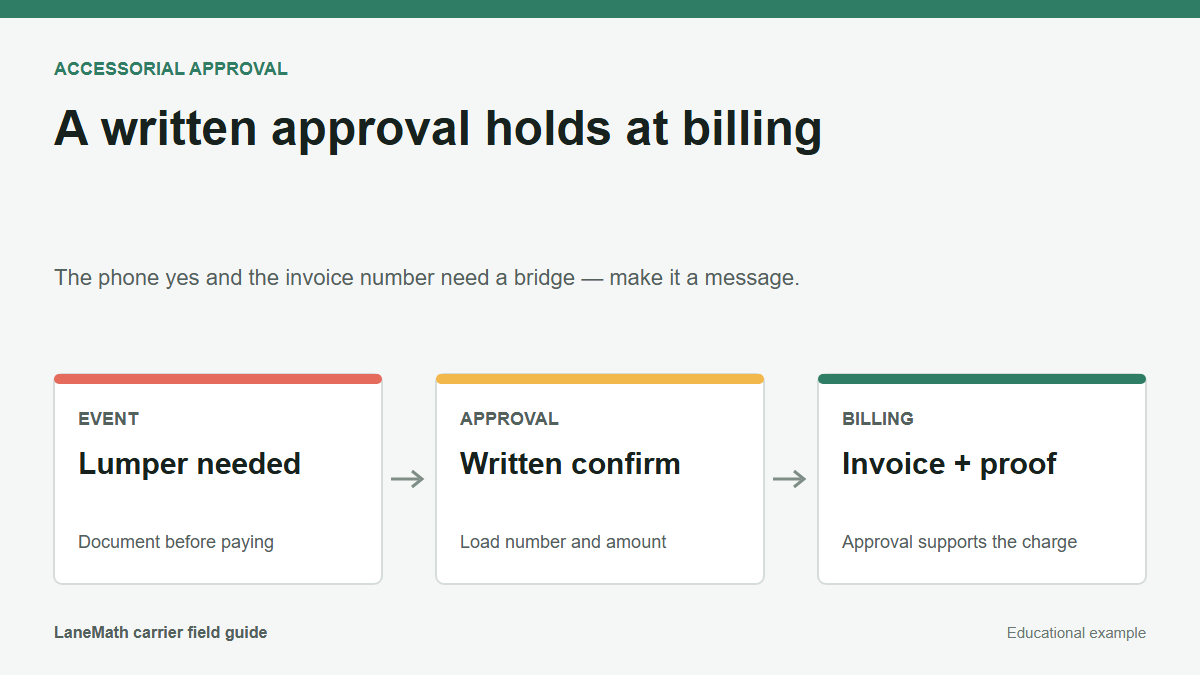
Accessorial approval documentation table
A written approval is more useful than a verbal one at every stage from dispatch through billing.
| Signal | Why it matters | Next check |
|---|---|---|
| Broker gave verbal approval | A phone yes may not be remembered the same way when the invoice arrives. | Send a short written message referencing load number, event, and agreed amount. |
| Amount is not confirmed | Approval without an amount leaves the billing step uncertain. | Ask for the approved figure or the method used to calculate it. |
| Broker says to note it on the invoice | A billing-time instruction is not the same as a pre-event approval. | Ask whether a revised confirmation or email approval will be issued now. |
| No response to the approval request | Silence does not create an approval record. | Send a follow-up with the load number and deadline before the truck departs. |
Key takeaways
- State the load number, event, amount if known, and approval request plainly.
- Ask whether a revised confirmation will be issued before billing.
- Keep the reply with the POD, BOL, invoice, and receipts.
Working frame for how to confirm accessorials in writing
A paperwork-first guide to turning a phone approval into a clear written record for detention, lumper, layover, TONU, or stop-off charges, including the written terms and records that matter before dispatch and after delivery. The first operating question is whether the subject changes money, time, equipment fit, payment exposure, or the truck's position after delivery. Keep those effects separate so one attractive number does not hide an unresolved condition.
Checks before the truck is committed
State the load number, event, amount if known, and approval request plainly. Ask whether a revised confirmation will be issued before billing. Keep the reply with the POD, BOL, invoice, and receipts. Write down any term that still depends on a broker reply before dispatch. Confirm the exact commodity, weight, equipment, appointments, facility rules, and approval path that apply to this load rather than relying on a familiar lane or broker relationship.
What document will carry the approval?
State the load number, event, amount or estimate, time, location, and proof available. Ask whether the broker will issue a revised confirmation, reply by email, or provide a billing reference. Different broker departments may treat a dispatcher's casual acknowledgment differently from formal approval.
Received is not the same as approved
A message such as got it or send the receipt may prove notice but not agreement to pay. Another mistake is discussing several charges in one vague thread without amounts or load references. Billing should not have to guess which sentence approved which event.
Attach approval to the event
Keep the request, broker response, revised confirmation when issued, receipt or timestamps, BOL or POD, and invoice line. Name the file or note by load number and charge type. The approval trail should connect the cost to the correct shipment without relying on a dispatcher mailbox search.
Example scenario
A receiver requires a $285 lumper. The carrier messages the broker with the load number, facility, amount, and a photo of the payment request. The broker replies with approval and later issues a revised confirmation. Both records stay with the receipt and POD. The numbers and circumstances are educational examples; replace them with the actual route, written terms, costs, and operating limits for the load being considered.
What to check before booking
- State the load number, event, amount if known, and approval request plainly.
- Ask whether a revised confirmation will be issued before billing.
- Keep the reply with the POD, BOL, invoice, and receipts.
- Write down any term that still depends on a broker reply before dispatch.
Common questions
What should a written accessorial confirmation include?
At minimum: the load number, the event (delay, lumper cost, changed appointment), the dollar amount if known, and a direct request asking whether the charge is approved. Attaching the supporting record — receipt, timestamp, gate note — with the message makes it easier to process.
Is a phone approval sufficient for accessorial charges?
A phone approval is better than nothing but is harder to use at billing time. A brief written follow-up that restates the approval with the load number and event details gives both parties a matching record and reduces the chance of a dispute when the invoice is submitted.
What format works best for a written accessorial approval request — text, email, or portal message?
The format the broker uses for the rest of the load communication is usually the right choice, as it keeps the record in one place. Email creates a datable, searchable record that integrates easily with a billing file. Whatever format is used, the message should be timestamped and reference the load number clearly.
What if the broker says approval will be handled during invoicing rather than at the time of the event?
Write down that response with the broker's name, load number, and timestamp. That is the basis for the accessorial billing when the invoice is submitted. If the broker later disputes the charge, the written exchange documenting their indication of approval during the load is part of the evidence. Oral-only conversations are harder to use at that stage.
References and methodology
- Accessorial documentation editorial methodology - LaneMath Editorial Desk. Used here for: Detention, lumper, layover, TONU, revised confirmation, and post-delivery document workflow examples.Used for documentation workflows and example scenarios, not for legal claims about collectability. Last checked 2026-06-29.