How to negotiate a truckload rate with a broker
A practical risk review for preparing a practical rate discussion around total miles, timing, accessorial terms, and written confirmation, written for carriers that need cleaner broker checks and billing records before committing a truck.
Written and reviewed by LaneMath Editorial Team, with carrier workflow review from Dale Morrow where practical dispatch, paperwork, or lane-planning context is involved. Updated 2026-06-29. LaneMath pages use public references, example-only math, and conservative editorial review.
Carrier review note
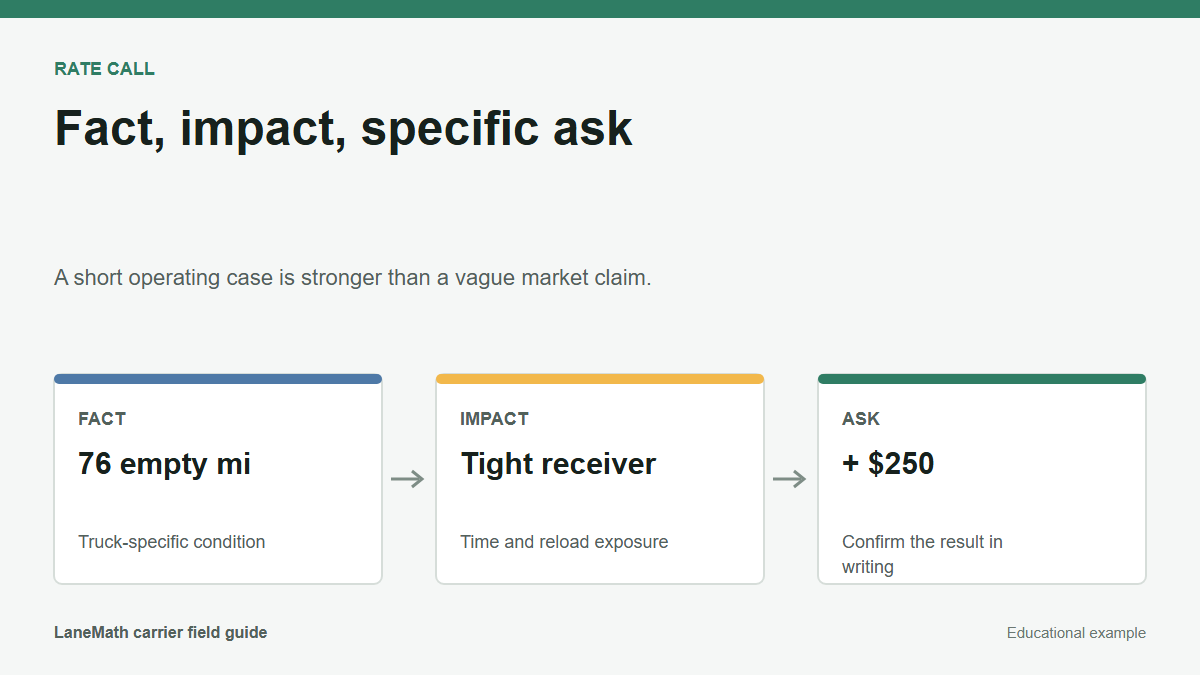
Dale's review favored truck-specific facts over broad market claims: the actual approach miles, appointment, work required, and delivery-side position. That is the basis for the fact-impact-ask sequence used in this guide.
Rate-call structure
A focused negotiation explains the truck-specific condition, its operating impact, and the exact change being requested.
| Signal | Why it matters | Next check |
|---|---|---|
| Truck has long approach miles | The carrier spends fuel and hours before the paid lane begins. | State the empty distance and include it in the counter. |
| Appointment creates a lost reload | The load consumes more calendar value than mileage suggests. | Explain the timing conflict without claiming a universal market rate. |
| Extra handling is required | Tarping, lumper, driver assist, or stops add work and proof requirements. | Ask for separate pay or a higher written total. |
| Broker accepts the counter | A verbal yes can still be missing from dispatch and billing documents. | Wait for the revised confirmation before moving the truck. |
Key takeaways
- Know your total miles and likely trip cost before making the call.
- Ask whether the rate is all-in and what can be revised in writing.
- Keep the discussion tied to load details, not pressure or guesswork.
Working frame for how to negotiate a truckload rate with a broker
A practical risk review for preparing a practical rate discussion around total miles, timing, accessorial terms, and written confirmation, written for carriers that need cleaner broker checks and billing records before committing a truck. The first operating question is whether the subject changes money, time, equipment fit, payment exposure, or the truck's position after delivery. Keep those effects separate so one attractive number does not hide an unresolved condition.
Checks before the truck is committed
Know your total miles and likely trip cost before making the call. Ask whether the rate is all-in and what can be revised in writing. Keep the discussion tied to load details, not pressure or guesswork. Write down any term that still depends on a broker reply before dispatch. Confirm the exact commodity, weight, equipment, appointments, facility rules, and approval path that apply to this load rather than relying on a familiar lane or broker relationship.
A calm rate call structure
A useful broker call is usually short. Confirm the load facts first, state the cost pressure second, and ask for a specific number or written change third. For example: the pickup is 70 empty miles away, delivery is a tight live unload, and the receiver requires lumper approval. That is a better negotiation basis than simply saying the rate is too low.
What fact supports the counteroffer?
Know the truck's location, total miles, appointment pressure, equipment work, destination, and direct trip costs before calling. Ask whether the broker can adjust rate, appointment, or a specific accessorial term. A concrete counter tied to the load gives both sides something they can evaluate.
A rate call can become too general
Saying the market is higher or the offer is too cheap gives the broker little operational reason to move. Quoting an unsupported market number creates the same problem. Another mistake is winning a higher gross while leaving an expensive lumper, stop, or appointment change unwritten.
Record the final number and what changed
Keep the opening offer, counter, reason, final rate, and any service term adjusted during the call. Save the revised confirmation before dispatch. If the broker changes only a verbal promise, the negotiation is not finished from a billing perspective.
Example scenario
The truck is 76 empty miles from pickup and the receiver has a narrow evening appointment. The carrier explains those two constraints and counters $250 above the offer. The broker adds $175 and confirms detention terms in writing, producing a different decision than a rate-only argument. The numbers and circumstances are educational examples; replace them with the actual route, written terms, costs, and operating limits for the load being considered.
What to check before booking
- Know your total miles and likely trip cost before making the call.
- Ask whether the rate is all-in and what can be revised in writing.
- Keep the discussion tied to load details, not pressure or guesswork.
- Write down any term that still depends on a broker reply before dispatch.
Common questions
What should a carrier know before negotiating with a broker?
Know total miles, pickup and delivery timing, likely trip cost, equipment fit, accessorial exposure, payment terms, and the reload plan before discussing the final number.
Should verbal broker changes be accepted?
Material changes should be confirmed in writing. A revised rate confirmation or clear written approval is easier to use for dispatch and billing than a remembered phone call.
Is it appropriate to counter a broker offer, or does that risk losing the load?
Countering is a normal part of freight booking on both sides. A counter that is tied to a specific cost fact — pickup deadhead, tight appointment, lumper exposure — is more effective than a general request for more money. Some loads will not move on price; others have room that only appears when the carrier asks.
What is the best way to end a negotiation that did not reach an agreement?
Decline clearly and briefly, without hostility. Saying the load does not work at the offered rate leaves the door open for the broker to call back if the price changes. A clean, professional decline is more useful long-term than walking away without explanation.
How do I negotiate when I need the load but the rate is low?
Separate what you need from what you say on the call. You can still ask whether the rate can move based on specific load factors, even when you plan to take it either way. A counter does not obligate you to walk away if the broker says no. What matters is whether the load at the offered rate works for the business — if it does, take it; if it does not, declining is the right answer regardless of how much the truck needs freight.
References and methodology
- Broker Registration - Federal Motor Carrier Safety Administration. Used here for: Broker authority and registration background.Used as a public reference for broker basics. Last checked 2026-06-29.
- Broker negotiation editorial methodology - LaneMath Editorial Desk. Used here for: Broker call preparation, rate discussion, appointment changes, written confirmations, and walk-away decision examples.Used for practical negotiation education. It does not provide legal advice, pricing promises, or broker recommendations. Last checked 2026-06-29.
- Rate confirmation educational reference - LaneMath Editorial Desk. Used here for: Educational discussion of rate confirmation review, revised confirmations, written approval, and document connections.Used for document literacy. It is not legal advice and does not replace professional review. Last checked 2026-06-29.